In Week 1 I wrote that patients hear after the team, never before, and never from a sign in the parking lot. This is the rest of that rule: what patients hear, who tells them, and what happens the first time they call or sit down in the hygiene chair after the change.
Patients chose you, or they chose a hygienist they have seen twice a year for a decade. A transition does not lose patients on the day of the sale. It loses them over the next few months, one skipped recare visit at a time, and most of the reasons are things the practice could have controlled.
When patients hear, and from whom
Patients hear after the team, usually after closing, from the doctor, in writing. That means a letter signed by you, sent in the first week or two after closing and before the sign, the statements, or the phone greeting change. If you are staying, that is the first sentence. If you are leaving at the end of your employment term, send a second letter months before you go that introduces the dentist who will see them, and introduce that dentist in person at their visits.
Some states have rules about notifying patients when a dentist leaves a practice or when patient records change hands. Your attorney will know yours, and one letter can do both jobs.
The letter
Keep it to one page, in your own words. Say what is staying the same: you, the team, the phone number, where their records are kept, and the insurance plans the office accepts, but only if each of those is true. Credentialing under a new tax ID, as in Week 4, can change the insurance answer for a while, so confirm it before you write it. Then say plainly what is changing: the name on the statement, the payment portal, a new set of forms at the next visit.
What you leave out matters as much. Do not write that nothing will change. Something will, and the first time it does, that sentence is what patients remember. Do not explain the deal, the buyer’s growth plans, or your retirement. And do not use a word you would not use with a patient in the chair. If you would not say partnership to Mrs. Jones at her six-month visit, do not put it in her letter.
The front-desk script
Patients ask the same four questions, mostly on the phone. Is the doctor still my dentist? Is my hygienist still here? Do you still take my insurance? Is it going to cost more? Write a short, true answer to each, and make sure every person who answers the phone gives the same one. Where the honest answer is that nobody knows yet, the script says so: let me find out and call you back today. Then someone calls back that day.
Two things stay off the script: the word corporate, and any guess about fees.
Brand changes, phone trees, and the patients who test them
Some patients will test the change, usually with a phone call. If they reach a recorded menu or a call center that does not know their name, they have their answer, and it is the wrong one. The same goes for a new sign that goes up before the letter arrives, or an online booking link that sends them to a page with a name they do not recognize.
These are integration decisions, and they are easier to ask for before closing than to fix after. Ask that the local number keep ringing at your front desk for the first ninety days, that the sign and the statements change after the letter goes out and not before, and that appointment confirmations come from people your patients know.
The first ninety days in the hygiene chair
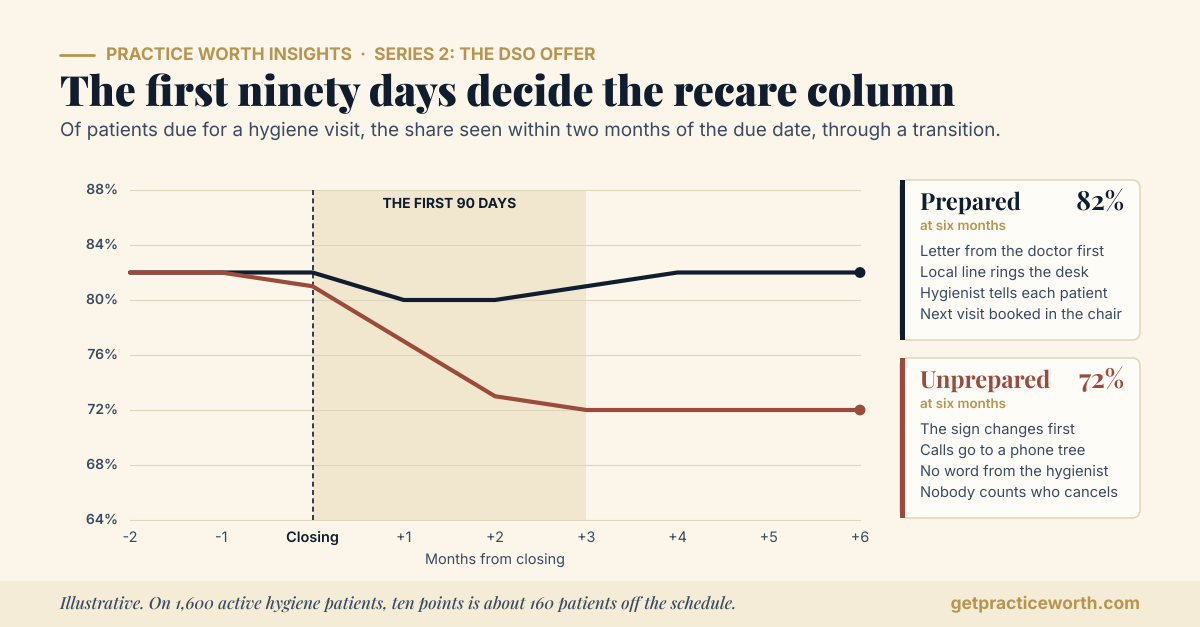
This is the retention window. The chart above is illustrative: of the patients due for a hygiene visit, the share seen within two months of their due date, before and after a transition. A prepared practice dips a point or two and recovers. An unprepared one slides about ten points and stays there. On the series’ example practice, with about 1,600 active hygiene patients, ten points is roughly 160 people who quietly fall off the schedule, and each of them is a cleaning, an exam, and whatever treatment that exam would have found. If part of the price is an earnout, those visits are part of it.
What keeps the line flat is mostly hygiene work. The hygienist tells each patient herself, at the first visit after the change: yes, the doctor is still here, and so am I. The next visit is booked before the patient leaves the chair. Someone counts, every week for six months, how many patients who were due were actually seen, and calls the ones who cancelled rather than waiting for them to call back.
Patients forgive a new name on the statement. What they do not come back from is a phone call nobody answers and a hygienist who left without a word.
The retention figures are illustrative, and the rules on patient notification and records differ by state. Your attorney should read the patient letter before it goes out.
Where to start
Practice Worth’s valuation starts from your P&L and your collections-by-provider report, which shows how much of your production runs through the hygiene chair, the part of the practice a transition puts most at risk. If an offer is already in hand, the offer review includes the transition questions to settle before closing: the patient letter, the phone line, and the timing of the name change.
About the author. Karen L. Eslinger, RDH, is a registered dental hygienist with decades of chairside experience and the owner and CEO of Practice Worth, which she co-founded in 2026 with Dr. David Eslinger, DDS, MBA. Practice Worth is a Missouri LLC. Learn more at getpracticeworth.com.
Dave’s companion piece from Tuesday covers the money that moves after the price is set: working capital, receivables, and the building.