The moment a practice changes is rarely the day the owner signs. From the hygiene chair, it looks more like this: a Tuesday, months earlier, when someone comes back from lunch and mentions that two people in suits just left with the doctor, and that the doctor has closed his door for the rest of the afternoon. Nobody has been told anything. By Friday the whole team has a story, and the story is worse than the truth. The best people in the building have their resumes out before the letter of intent is signed.
Dave's piece on Tuesday covered what a DSO is screening for on the first call. This is the other half of week one, and it is the half owners tend to handle badly, because it does not feel like part of the deal. It is the deal. The team is an earnings input. Provider dependence, hygiene share, and turnover all show up in the buyer's number, and the fastest way to damage all three is to let the building find out on its own.
Confidentiality is a staffing decision
Owners think of confidentiality as protecting the negotiation. It is protecting the practice. A team reads signals the way a hygienist reads a chart: the closed door, the visitors, the CPA in the office on a Wednesday, the production reports someone suddenly wants by provider. The person who reads those signals first is usually your most experienced hygienist or your office manager, because they have been through a transition before and know what one looks like. She is also the person whose departure costs the most.
Here is what that costs in the deal itself. A senior hygienist who leaves takes her recare column with her, and the buyer's diligence team, the one Dave will write about in Week 7, will see the turnover in the payroll records and the drop in hygiene production and price both. The rumor does not just hurt morale. It shows up in the number.
The three circles
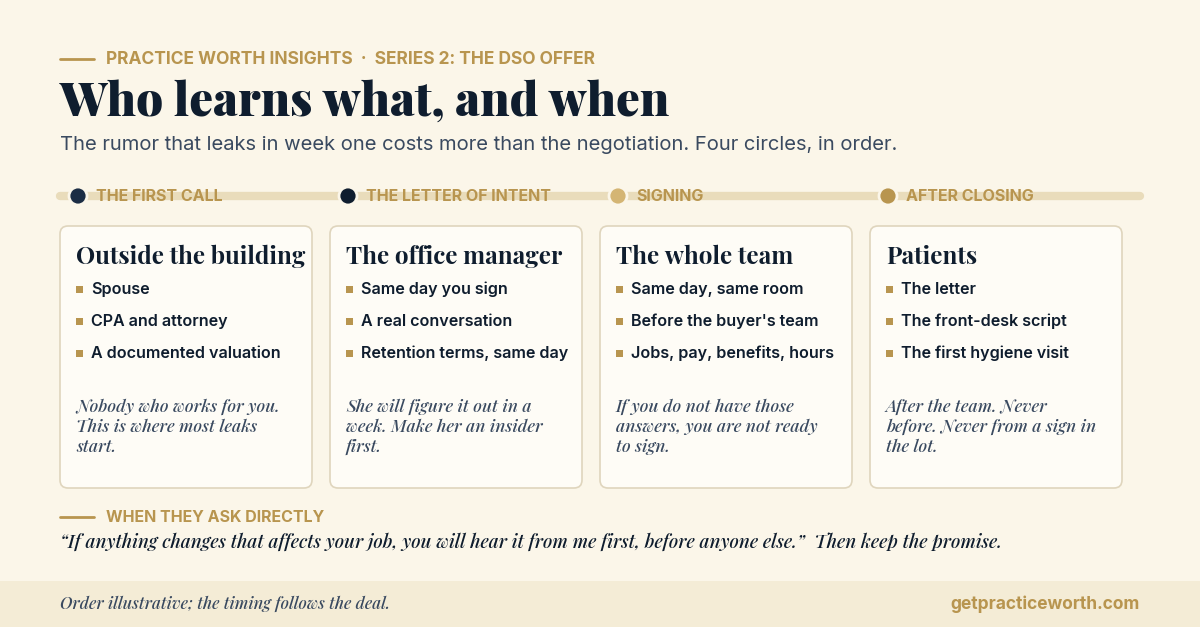
Not everyone needs to know at once, and the order is the whole point.
Now, at the first call: the circle outside the building. Your spouse, your CPA, your attorney, and a documented valuation so you know your number before you know theirs. Nobody who works for you. This is the stage where most leaks happen, and they happen because the owner needs someone to talk to and picks the office manager. Do not. Pick the circle outside.
At the letter of intent: the office manager. Once you sign an LOI, the data requests begin, and she is the person who will have to pull the reports, answer the questions, and cover for your absences. She will figure it out within a week whether you tell her or not. Tell her the same day you sign, in a real conversation, and make the retention conversation part of the same meeting: what her role looks like after closing, what you are negotiating on her behalf, and what stays for her if she stays. You are not asking her to keep a secret. You are making her an insider with a stake in the outcome.
At signing: the whole team, same day, same room. Before the DSO's transition team arrives, before the announcement email, before anything is posted. Every person hears it from you at the same time, and you have the answers to the questions they will ask ready before you walk in: their jobs, their pay, their benefits, their schedule, and who they report to on Monday. If you do not have those answers yet, you are not ready to sign, and that is a negotiation point, not a communication problem. Dave covers those employment terms in Week 3.
After closing: patients. The letter, the front-desk script, and the first hygiene visit under the new name. That is Week 9. For now, the rule is that patients hear after the team, never before, and never from a sign in the parking lot.
What to say when they ask directly
They will. Someone will stop you in the hallway and ask if the practice is being sold, and the worst answer is a flat no that turns out to be a lie in three months. Trust that survives a transition is trust that was not broken during it.
The answer that works is true at every stage: I get calls about the practice all the time, and I am not going to talk about every one of them. If anything changes that affects your job, you will hear it from me first, before anyone else, and before it is final. Then keep that promise. The promise is what buys you the quiet months between the first call and signing, and it only works once.
Retention conversations start before the DSO's do
The buyer's transition team will meet your staff within days of closing with a retention plan of their own: new titles, a benefits presentation, sometimes a bonus. It will be polished and it will be theirs. If it is the first retention conversation your team has had, they will conclude that the people who care about them now work for the DSO, and they will not be wrong.
Yours has to come first. Decide who is essential, usually the senior hygienist, the office manager, and a lead assistant. Decide what you are willing to fund from proceeds or negotiate into the deal to keep them, and get the buyer's commitments on their roles in writing before you sign, not after. If any part of your price is an earnout, and Dave gets to those in Week 6, you are betting on production from a team you will no longer run. The time to protect that bet is now, while you still sign their paychecks.
The negotiation decides the price. The order in which the building finds out decides how much of the practice is still there to sell.
Where to start
Start with the circle outside the building, and start with the number. Practice Worth rebuilds your earnings the way a buyer will and gives you the documented figure before you return the call. If an offer is already in hand, the offer review reads the deal, including what it means for your team, before you sign anything that starts the clock.
About the author. Karen L. Eslinger, RDH, is a registered dental hygienist with decades of chairside experience and the co-owner and CEO of Practice Worth, which she co-founded in 2026 with Dr. David Eslinger, DDS, MBA. Practice Worth is a Missouri LLC. Learn more at getpracticeworth.com.
Dave’s companion piece from Tuesday covers the money side of week one: what a DSO is actually screening for on the first call.